
Introduction
Have you noticed how AI tools like ChatGPT, Gemini, and Microsoft Copilot are becoming part of classrooms and everyday learning? As Artificial Intelligence continues to reshape education and careers, India has launched the AI Literacy Mission to ensure that students and teachers are prepared for an AI-driven future. But what exactly is this mission, and why should you care? Let’s find out.
Recognizing the growing importance of AI, the Government of India has launched several initiatives under the IndiaAI Mission to make AI education and awareness accessible to everyone. One of the major efforts is the AI Literacy Mission, which aims to help students, teachers, professionals, and citizens understand the basics of Artificial Intelligence and use it responsibly. (Principal Scientific Adviser)
But what exactly is India’s AI Literacy Mission? Who can participate? Why is it important for students? And how can it help you prepare for future careers?
In this comprehensive guide, we’ll answer all these questions in simple language so that every student can understand the mission and make the most of the opportunities it offers.
What is India’s AI Literacy Mission?
India’s AI Literacy Mission is a national initiative designed to make Artificial Intelligence education accessible to everyone, regardless of their age, educational background, or technical expertise.
The mission is part of the broader IndiaAI Mission, an initiative by the Ministry of Electronics and Information Technology (MeitY), Government of India. Its primary objective is to build an AI-ready nation by improving awareness, digital skills, and responsible AI usage among citizens. (Principal Scientific Adviser)
Unlike advanced AI courses that focus on programming or data science, the AI Literacy Mission starts with the fundamentals. It helps learners understand:
- What Artificial Intelligence is
- How AI works in everyday life
- Benefits and limitations of AI
- Responsible and ethical use of AI
- How AI is changing different industries
- Future career opportunities in AI
The mission is based on the idea that AI literacy should become as essential as digital literacy in today’s world.
Why Was the AI Literacy Mission Introduced?
Technology is evolving faster than ever before.
Many industries now use AI to improve productivity, automate repetitive tasks, analyze large amounts of data, and make better decisions. As AI becomes more common, every student—not just computer science students—needs to understand how it works.
The Government of India introduced AI literacy initiatives to:
- Prepare students for future careers.
- Build awareness about responsible AI usage.
- Encourage innovation and problem-solving.
- Reduce the digital skills gap.
- Promote ethical and safe use of AI technologies.
- Support India’s vision of becoming a global leader in Artificial Intelligence. (Principal Scientific Adviser)
Instead of treating AI as a specialized subject for engineers, the mission encourages people from every field to gain basic AI knowledge.
Why is AI Literacy Important for Students?
Imagine graduating five years from now.
Whether you become a doctor, lawyer, teacher, engineer, designer, accountant, journalist, entrepreneur, or government officer, there is a high chance that AI-powered tools will become part of your daily work.
Students who understand AI will be better prepared to:
- Learn faster using AI-powered educational tools.
- Improve productivity through automation.
- Analyze information more effectively.
- Develop future-ready digital skills.
- Stay competitive in an evolving job market.
- Use AI responsibly without becoming overdependent on it.
AI literacy is not about replacing human intelligence. Instead, it helps people use AI as a powerful assistant to enhance learning and decision-making.
Quick Tip
AI is a learning assistant, not a replacement for your own thinking. Always verify important information and use AI to improve your understanding rather than copying answers.
Objectives of India’s AI Literacy Mission
The AI Literacy Mission has several important goals that support India’s long-term digital transformation.
1. Make AI Knowledge Accessible
The mission aims to introduce AI concepts in a simple and easy-to-understand manner so that anyone can start learning, even without a technical background.
2. Build an AI-Ready Workforce
India has one of the world’s largest youth populations. By improving AI literacy, the government aims to prepare future professionals with skills that industries increasingly demand. (Press Information Bureau)
3. Promote Responsible AI
Learners are encouraged to understand not only AI’s benefits but also its risks, including misinformation, bias, privacy concerns, and ethical considerations.
4. Encourage Innovation
Students are motivated to explore AI-based solutions for solving real-world problems in healthcare, education, agriculture, transportation, and environmental sustainability.
5. Support Digital India
The mission aligns with India’s broader vision of strengthening digital infrastructure, improving technological capabilities, and fostering innovation across the country. (Principal Scientific Adviser)
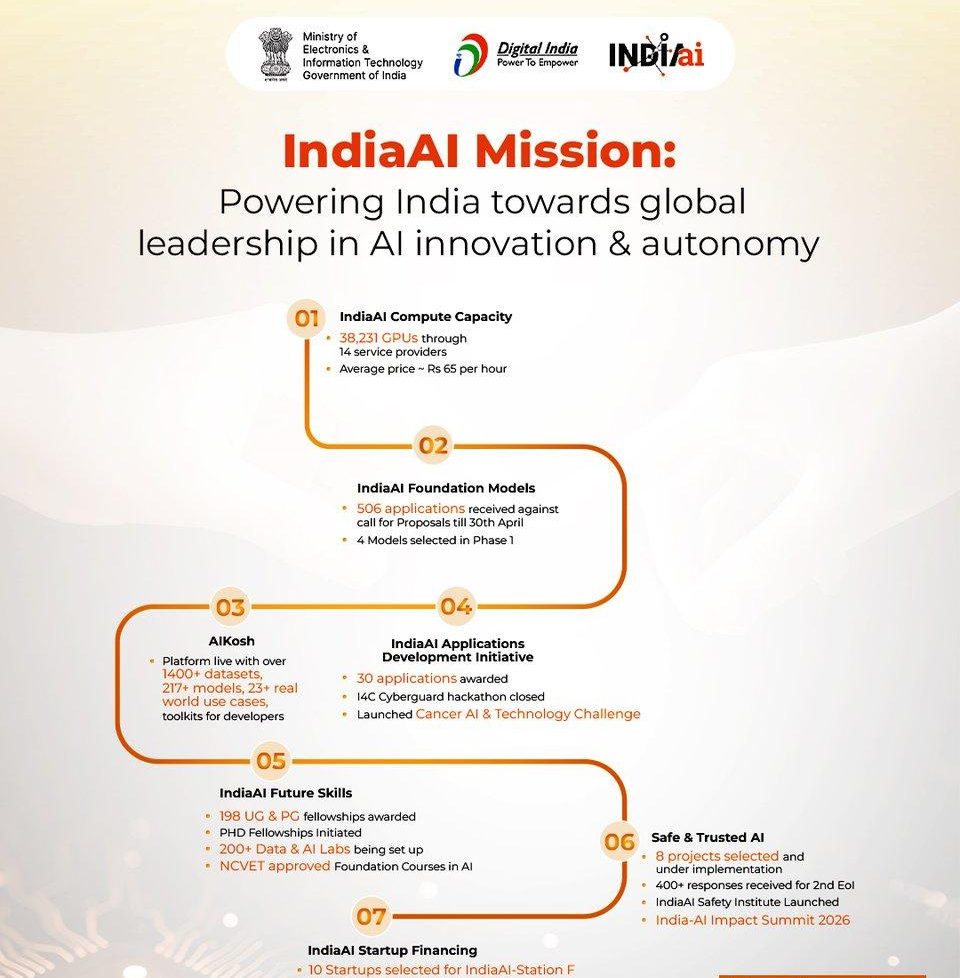
Did You Know?
IndiaAI Mission was approved by the Union Cabinet in March 2024 with the objective of creating a comprehensive AI ecosystem that supports research, innovation, computing infrastructure, AI skill development, startups, and responsible AI adoption across India. (Principal Scientific Adviser)
Who Can Participate in India’s AI Literacy Mission?
One of the biggest strengths of India’s AI Literacy Mission is that it is designed for everyone, not just computer science students or software engineers.
Whether you are a school student, college student, teacher, working professional, entrepreneur, or simply someone interested in learning about Artificial Intelligence, the mission encourages you to build AI awareness and digital skills.
The initiative follows an inclusive learning approach, ensuring that people from different educational backgrounds can understand AI without requiring advanced programming knowledge.
The Mission is Suitable For:
School Students
Students from middle and senior secondary classes can begin understanding the basics of Artificial Intelligence at an early stage.
Topics usually include:
- What is AI?
- AI in daily life
- Responsible use of AI
- AI-powered applications
- Basic problem-solving using AI
Learning AI at school helps students prepare for future careers where AI skills will become increasingly valuable.
College Students
Students pursuing engineering, commerce, arts, science, law, medicine, management, or any other discipline can benefit from AI literacy.
Even if your career is not directly related to technology, AI knowledge can improve productivity, research, communication, and decision-making.
Teachers and Educators
Teachers play an important role in introducing AI concepts to students.
The mission encourages educators to:
- Understand AI fundamentals.
- Learn responsible AI practices.
- Integrate AI tools into classroom teaching.
- Create interactive learning experiences.
- Guide students on ethical AI usage.
Teachers who understand AI can make learning more engaging and prepare students for a technology-driven future.
Working Professionals
Professionals from different industries can also improve their careers by learning AI.
Examples include:
- Doctors using AI for medical diagnosis.
- Bank employees using AI-powered fraud detection.
- Marketing professionals using AI for content creation.
- HR teams using AI for recruitment.
- Business owners using AI for customer support and automation.
AI literacy is becoming valuable across almost every profession.
General Citizens
Even individuals without technical backgrounds can participate.
Understanding AI helps people:
- Identify misinformation created using AI.
- Protect their online privacy.
- Use AI tools responsibly.
- Improve digital literacy.
- Stay informed about emerging technologies.
Key Features of India’s AI Literacy Mission
The AI Literacy Mission focuses on making AI education practical, inclusive, and easy to understand.
Some of its major features include:
1. Beginner-Friendly Learning
The mission starts with basic concepts before introducing advanced ideas.
Learners are not expected to know programming or mathematics beforehand.
This makes AI education accessible to everyone.
2. Practical Learning
Instead of only studying theory, learners are encouraged to explore how AI is used in real life.
Examples include:
- Chatbots
- Language translation
- Face recognition
- Smart assistants
- Recommendation systems
- Healthcare applications
Understanding practical applications helps students relate AI concepts to everyday experiences.
3. Responsible AI Education
AI is powerful, but it must be used responsibly.
The mission emphasizes topics such as:
- Data privacy
- AI ethics
- Human oversight
- Transparency
- Fairness
- Responsible content creation
Students learn not only how AI works but also how to use it safely and ethically.
4. Future-Ready Skill Development
The initiative prepares learners for future technologies by introducing skills that industries increasingly demand.
These include:
- AI awareness
- Digital problem-solving
- Critical thinking
- Data literacy
- Computational thinking
These skills remain useful regardless of career choice.
5. Inclusive Digital Education
The mission aims to ensure that AI education reaches learners from different regions, languages, and educational backgrounds.
Its long-term vision is to reduce the digital divide and make AI knowledge available to a wider audience.
What AI Skills Will Students Learn?
The AI Literacy Mission does not aim to make every student an AI engineer.
Instead, it helps students understand AI concepts that are becoming essential in modern education and workplaces.
Some important skills include:
Understanding Artificial Intelligence
Students learn:
- What AI is.
- What AI is not.
- How AI differs from traditional computer programs.
Using AI Responsibly
Students understand:
- When to trust AI.
- When to verify AI-generated information.
- How to avoid misinformation.
- Ethical use of AI tools.
This is one of the most important skills in today’s digital world.
Prompt Writing Basics
As AI tools become more common, students learn how to ask better questions to obtain more accurate responses.
This skill is often called Prompt Engineering, and it is becoming valuable across many professions.
Critical Thinking
The mission encourages students to think independently instead of accepting every AI-generated answer without verification.
Students learn to:
- Analyze information.
- Verify facts.
- Compare multiple sources.
- Identify incorrect AI outputs.
Digital Problem Solving
AI can help solve everyday challenges.
Students may explore AI applications in:
- Education
- Agriculture
- Healthcare
- Environment
- Transportation
- Business
This encourages creativity and innovation.
How Can Teachers Benefit?
Teachers are among the biggest beneficiaries of AI literacy.
AI can reduce routine work while improving classroom learning.
Examples include:
Lesson Planning
Teachers can generate lesson ideas, worksheets, quizzes, and classroom activities more efficiently.
Personalized Learning
AI tools can recommend learning materials based on each student’s needs and performance.
Faster Assessment
AI can assist in evaluating assignments, generating feedback, and identifying learning gaps.
Interactive Teaching
Teachers can use AI-powered presentations, educational videos, simulations, and virtual assistants to make lessons more engaging.
Professional Development
Teachers can continuously learn new AI tools and digital teaching methods to enhance their classroom practices.
AI in Schools and Colleges
Many educational institutions are gradually introducing AI through:
- Coding clubs
- Innovation labs
- Robotics workshops
- AI awareness sessions
- Hackathons
- Digital literacy programs
- Project-based learning
These activities help students understand how AI can solve real-world problems instead of viewing it only as a classroom subject.
Quick Summary
India’s AI Literacy Mission is designed for learners of all ages. It focuses on building awareness, encouraging responsible AI usage, and preparing students, teachers, and professionals with future-ready digital skills. Rather than teaching complex programming from the beginning, it introduces AI in a simple, practical, and inclusive way so that everyone can understand and benefit from it.
Who Can Participate in India’s AI Literacy Mission?
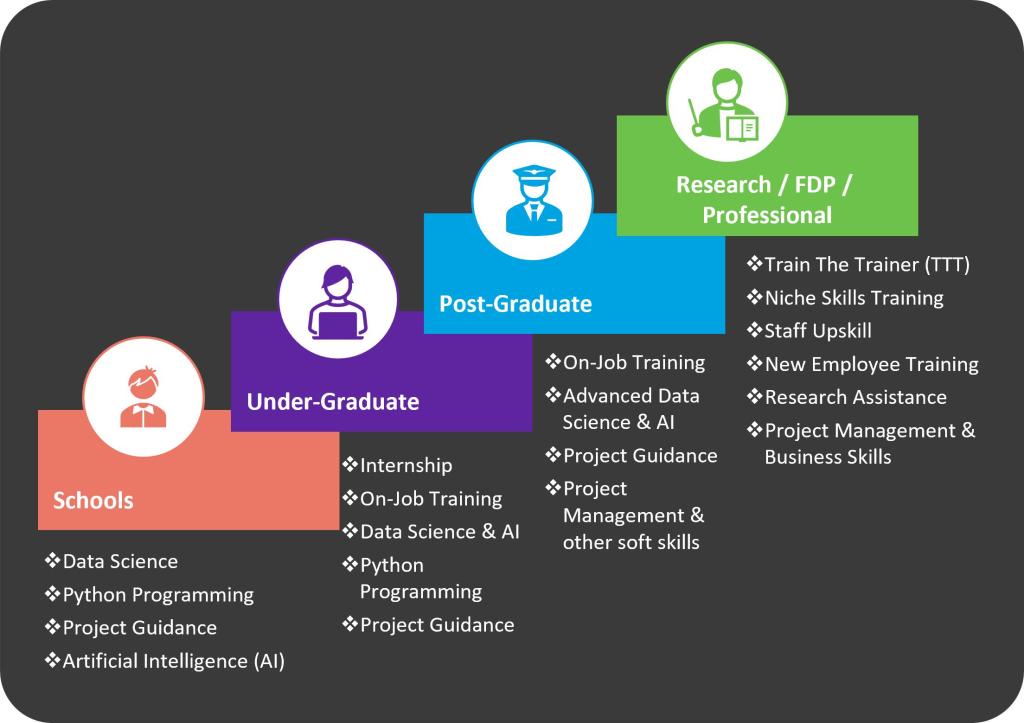
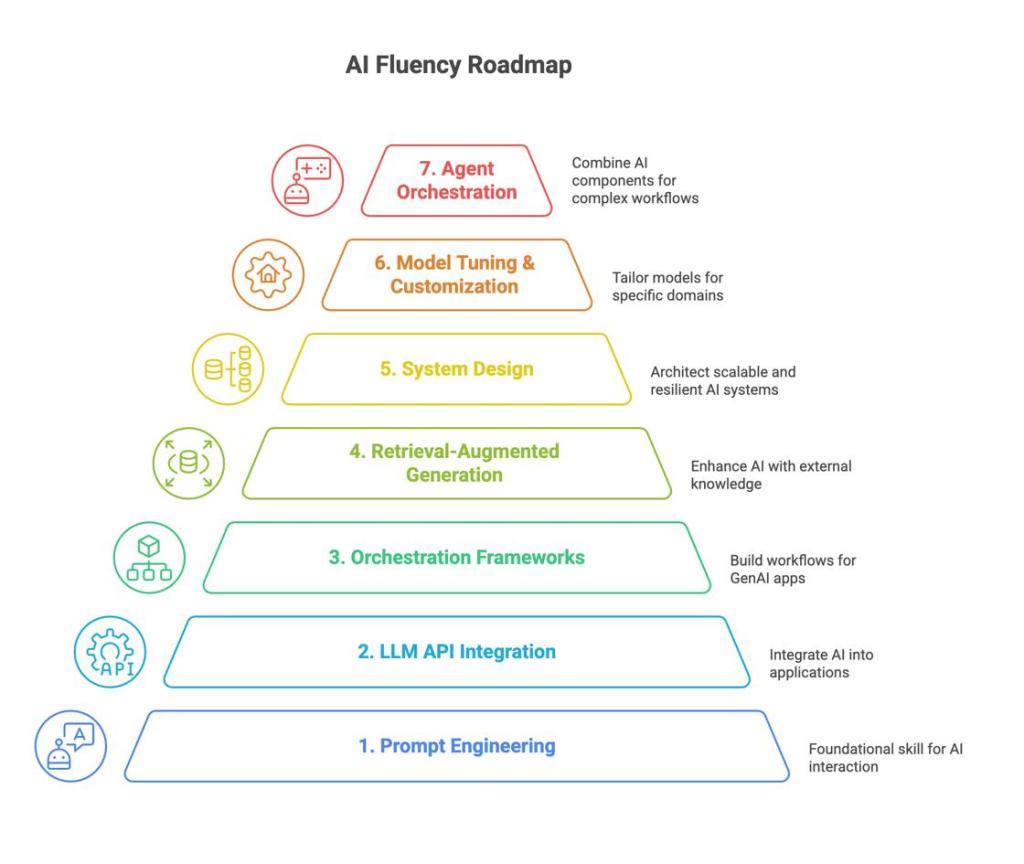
Government Initiatives Supporting AI Education in India
To make AI education more accessible, the Government of India has introduced several initiatives under the broader IndiaAI Mission. These programs aim to help students, teachers, startups, researchers, and professionals develop AI skills through learning resources, innovation opportunities, and research support.
Some of the important initiatives include:
1. IndiaAI Mission
The IndiaAI Mission is India’s flagship initiative for strengthening the country’s Artificial Intelligence ecosystem. It focuses on:
- AI computing infrastructure
- AI innovation
- AI skill development
- Startup support
- Research and development
- Safe and responsible AI
Its long-term vision is to make India a global leader in Artificial Intelligence while ensuring that AI benefits every citizen.
2. YUVA AI (Young India AI)
YUVA AI is an initiative designed to encourage young students to explore Artificial Intelligence through practical learning and innovation.
Students are encouraged to:
- Learn AI fundamentals.
- Solve real-world problems.
- Build AI-based projects.
- Participate in innovation challenges.
Programs like YUVA AI help students develop creativity, problem-solving abilities, and confidence in using emerging technologies.
3. Future Learning Opportunities
As AI education expands across India, students can also benefit from:
- AI awareness workshops
- School innovation labs
- Online AI courses
- Coding competitions
- AI hackathons
- Digital literacy programs
- Research internships
These opportunities help learners move from understanding AI concepts to applying them in practical situations.
Career Opportunities After Learning AI
One common question students ask is:
“Do I need to become a software engineer to benefit from AI?”
The answer is No.
AI is transforming almost every profession, which means basic AI knowledge is becoming valuable regardless of your career choice.
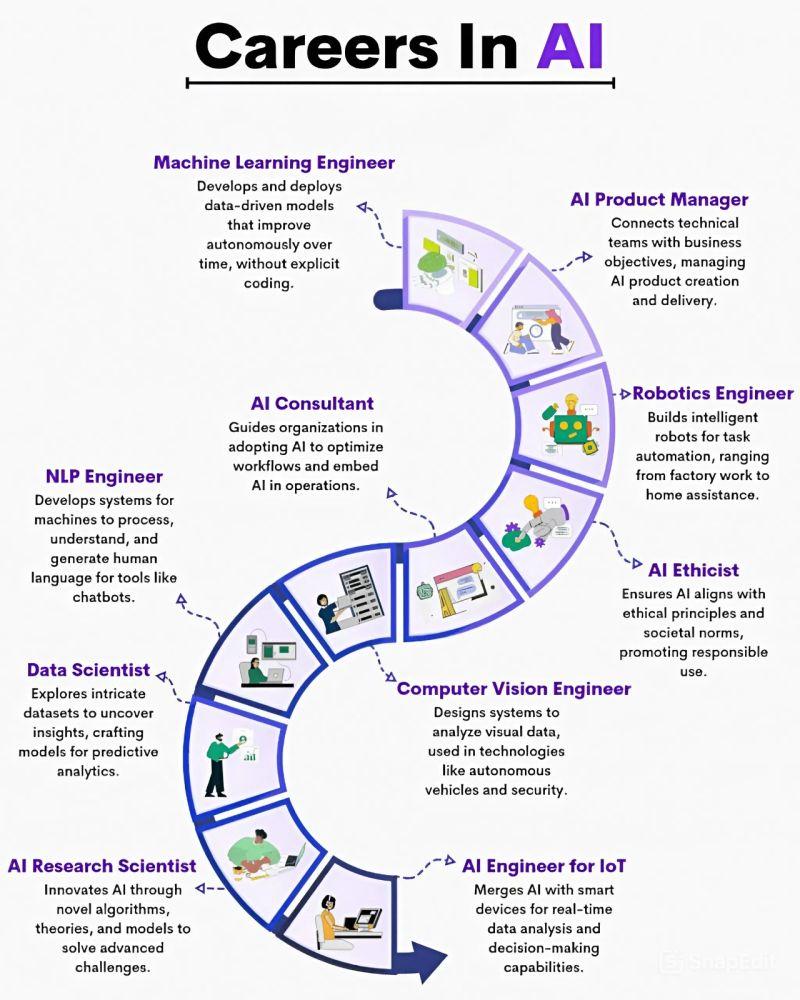
Popular Careers That Use AI
- Software Engineer
- Data Scientist
- Machine Learning Engineer
- AI Researcher
- Robotics Engineer
- Cybersecurity Analyst
- Business Analyst
- Digital Marketing Specialist
- Healthcare Professional
- Financial Analyst
- Teacher
- Content Creator
- Entrepreneur
Even if you choose careers in law, journalism, design, agriculture, or management, AI tools can help improve productivity and decision-making.
How Can Students Start Learning AI Today?
You don’t need expensive software or advanced programming knowledge to begin learning AI.
Here are a few simple steps:
Step 1: Understand the Basics
Start by learning:
- What AI is
- How AI works
- Types of AI
- Real-life applications
Building a strong foundation makes advanced concepts easier to understand.
Step 2: Explore AI Tools
Try beginner-friendly AI tools such as:
- ChatGPT
- Gemini
- Microsoft Copilot
- Google Lens
- Canva AI
Use these tools to assist your learning, but always verify important information.
Step 3: Learn Basic Programming (Optional)
If you’re interested in building AI applications in the future, learning programming languages like Python can be helpful.
However, AI literacy itself does not require programming knowledge.
Step 4: Participate in Competitions
Many schools, colleges, and organizations conduct:
- AI quizzes
- Coding competitions
- Hackathons
- Innovation challenges
- Science exhibitions
These activities provide practical experience and improve problem-solving skills.
Step 5: Stay Curious
Artificial Intelligence is evolving rapidly.
Reading educational articles, attending webinars, watching demonstrations, and experimenting with AI tools will help you stay updated.
Challenges of AI Literacy
Although AI offers many benefits, there are also challenges that students should understand.
Digital Divide
Not every student has equal access to high-speed internet, computers, or AI learning resources.
Bridging this gap is important to ensure equal learning opportunities.
Misinformation
AI can sometimes generate incorrect or misleading information.
Students should always verify important facts using trusted sources.
Privacy Concerns
Many AI applications collect user data.
Learners should understand how to protect their personal information while using online tools.
Ethical Use
AI should never be used for:
- Cheating in examinations
- Creating fake information
- Cyberbullying
- Plagiarism
- Deepfake misuse
Responsible AI usage is one of the key messages of India’s AI Literacy Mission.
Frequently Asked Questions (FAQs)
1. What is India’s AI Literacy Mission?
India’s AI Literacy Mission is an initiative that helps students, teachers, professionals, and citizens understand Artificial Intelligence and use it responsibly.
2. Who can participate in the AI Literacy Mission?
The mission is open to students, teachers, working professionals, entrepreneurs, researchers, and anyone interested in learning AI.
3. Do I need programming knowledge to learn AI?
No.
The AI Literacy Mission focuses on basic AI awareness and responsible usage. Programming is helpful for advanced AI development but is not required to understand AI concepts.
4. Why is AI literacy important?
AI literacy helps people understand emerging technologies, improve digital skills, use AI responsibly, and prepare for future careers.
5. Is AI only useful for engineering students?
No.
AI is useful across healthcare, education, business, agriculture, law, finance, media, design, and many other fields.
6. Will AI replace all jobs?
AI is more likely to change the way people work rather than replace every job.
People who learn to work with AI will have better opportunities in the future.
7. What skills should students develop for the AI era?
Students should focus on:
- Critical thinking
- Creativity
- Communication
- Problem-solving
- Digital literacy
- Responsible AI usage
- Continuous learning
8. Where can students learn more about AI?
Students can explore government initiatives, educational institutions, trusted online learning platforms, and AI awareness programs introduced under the IndiaAI Mission.
Conclusion
Artificial Intelligence is rapidly changing the way we live, learn, and work. As AI becomes a part of everyday life, understanding its fundamentals is no longer optional—it is becoming an essential life skill.
India’s AI Literacy Mission is an important step toward preparing students, teachers, professionals, and citizens for a technology-driven future. By promoting AI awareness, ethical practices, and digital skills, the mission aims to ensure that everyone can confidently participate in the AI revolution.
For students, AI literacy is not just about learning a new technology. It is about developing the ability to think critically, solve problems creatively, and use AI responsibly. Those who start learning today will be better prepared for tomorrow’s careers and opportunities.
Whether you dream of becoming a doctor, engineer, teacher, entrepreneur, artist, or scientist, understanding Artificial Intelligence will help you stay relevant in an increasingly digital world.
The future belongs to learners who embrace technology while continuing to think independently. India’s AI Literacy Mission provides an excellent starting point for that journey.
Key Takeaways
- India’s AI Literacy Mission aims to make AI knowledge accessible to everyone.
- The initiative supports students, teachers, professionals, and lifelong learners.
- AI literacy focuses on awareness, responsible use, and future-ready skills.
- Programming is not required to begin learning AI.
- Understanding AI today can open doors to tomorrow’s opportunities.
Very informative